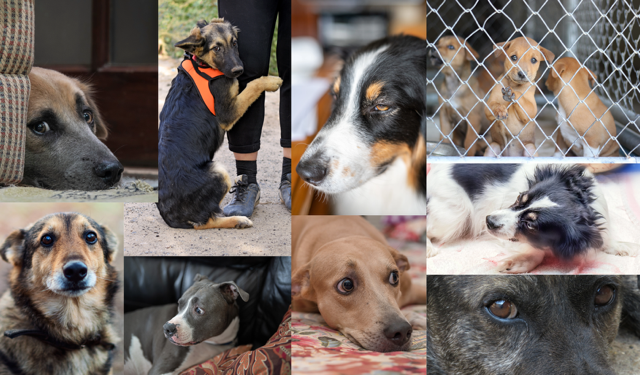
If you’re here reading this blog because your dog has separation anxiety and some other behavior challenges, you’re in the right place.
And more importantly: You’re not alone.
In fact, it’s incredibly common for dogs who struggle with being left alone to also face other issues. Maybe your dog panics during thunderstorms. Maybe they bark at every sound, or freak out when confined. Separation anxiety rarely exists in a tidy little vacuum. More often, it shows up as part of a messier picture—a multi-layered web of emotional challenges.
So if you’ve ever thought, “Why does my dog have so many issues?”—deep breath. Your dog isn’t more difficult. They’re more layered. And we can work with that.
What Else Is Going On? Common Co-Occurring Struggles
Let’s talk about a few behavior patterns that often walk hand-in-hand with separation anxiety:
- Noise Sensitivities
Sudden sounds like garbage trucks, fireworks, or even the mail slot can rattle a dog who’s already on edge. - Barrier Frustration
Some dogs panic when they can see you but can’t get to you. Think baby gates or glass doors—it’s not being alone, it’s being blocked off or restricted to access. - Confinement Distress
This one gets confused with SA a lot. A dog may do fine when left loose in the house, but panics when crated or confined. It’s about space, not solitude. - Generalized Anxiety
Constant pacing, hypervigilance, inability to settle—even when you’re home. These dogs are always “on,” and the world feels overwhelming. - Frustration-Based Behaviors
Demand barking, destructive chewing, or acting out when routines shift. Not every meltdown is panic, sometimes it’s just a really big ugh from your dog.
Each of these behaviors may look similar to separation anxiety on the surface, but they often have different emotional roots. Some are indeed about fear. Some about frustration. Some about a lack of agency or control over the environment. That’s why one-size-fits-all advice doesn’t cut it.
The Layers are Real
Here’s one way I like to describe this: Your dog’s behavior is like a layer cake. (Donkey in Shrek may argue it’s like Parfait, and he is not wrong.)
Separation anxiety might be the bottom layer. On top of that might be noise sensitivity, or frustration, or confinement stress. And the frosting? That’s the day-to-day tension that can build up for both of you.
You can’t just easily slice one layer out and leave the rest intact. The whole thing holds together intricately. So when we work on helping dogs feel safe alone, we often need to gently address the other layers too.
Where Do I Even Start?
Great question, and one I get often.
When there’s more than one challenge on the table, we take a moment to triage:
- Safety First: Is your dog likely to hurt themselves? For example, trying to escape a crate or chewing through doors? If yes, we pause crate use and prioritize environmental safety.
- Stress Level: Which struggle is having the biggest emotional impact on your dog (and your household)? That’s a good place to begin.
- Your Capacity: What feels doable right now? If one challenge feels more manageable to address, that’s totally valid as a starting point.
Remember, you don’t have to address everything at once. Choose one thread, and begin to untangle it with kindness and consistency.
Progress Isn’t Linear—and That’s Okay
This is your gentle reminder that healing, learning, and behavior change don’t follow a neat, upward graph. There will be plateaus. There may be setbacks. Sometimes, it feels like you’ve taken two steps forward and then—bam—a thunderstorm or a weird week throws everything off.
This doesn’t mean you’ve failed. It means you’re in the middle of the process. And that process includes ebb and flow.
Consistency helps. But so does compassion.
What Success Actually Looks Like
When a dog has multiple emotional struggles, success often means more comfort, less distress, and a better ability to cope—not perfection.
You might not end up with a dog who snoozes peacefully for six hours while you’re at brunch. But maybe your dog can now rest calmly while you grab groceries or head to the gym. That’s real. That’s powerful. And that’s progress worth celebrating.
I’ve worked with many guardians whose dogs had complex needs. And I’ve seen those dogs thrive, not by being “fixed,” but by being understood.
You Don’t Have to Do This Alone
If your dog is dealing with separation anxiety and other behavioral challenges, it’s okay to ask for help. In fact, that’s one of the most loving things you can do for them and for you.
Look for support from certified behavior professionals who understand the intricacies of canine emotions and who can help you build a customized plan. Cookie-cutter advice won’t cut it when your dog is made up of overlapping, nuanced needs.
Final Thoughts: More Than One Thing, Still One Wonderful Dog
If your dog has a few extra quirks, sensitivities, or behaviors that make life more complicated, that doesn’t make them broken. It makes them a dog with a story.
And you? You’re the person showing up for them. Supporting them. Learning with them. That’s something to be proud of.
So whether you’re just starting out or knee-deep in the process, know this: You are doing hard, beautiful work. And your dog is lucky to have you.
Bonus Resource:
If you’re navigating multiple behavior challenges and want structured support, Mission POSSIBLE offers step-by-step guidance and moderated help so you’re never alone in the process. Because complex dogs need compassionate solutions—and so do their people.